Learn more on RoamBeyondRome.com
It is sharing the stories behind historical artifacts that gives me the most joy as a tour guide. Yesterday morning I had the opportunity to share this joy with a small group I took on a “behind the facade sights tour of Viterbo” . Joining me were a colleague from Rome who wanted to explore this area and a dear friend from Australia who had been in the area many times, but had only seen the most iconic places. We entered one of my favourite Romanesque churches, Santa Maria Nova, and they were both captured by a painting on leather of the holy Saviour. The painting was beautiful and intriguing, as is so much of the art found in churches and museums across Italy. However, it was when I was able to share the story behind the painting that the interest of my tour participants was truly engaged.
This is the story behind the artwork…
It was year 1283, when, according to a manuscript found in the church archives, two ploughmen discovered a miraculous image of Christ while working in a field in the area known as Chirichera.
The oxen pulling the plough suddenly stopped, refusing to move despite all efforts. When the men began digging around the plough, they uncovered a stone chest containing a beautiful triptych of the Saviour, painted on leather applied to wooden boards in the Roman-Byzantine style. The find was seen as a divine sign, and the image was solemnly brought in procession to the nearby church of Santa Maria Nuova, accompanied by clergy, city officials, and the citizens of Viterbo.
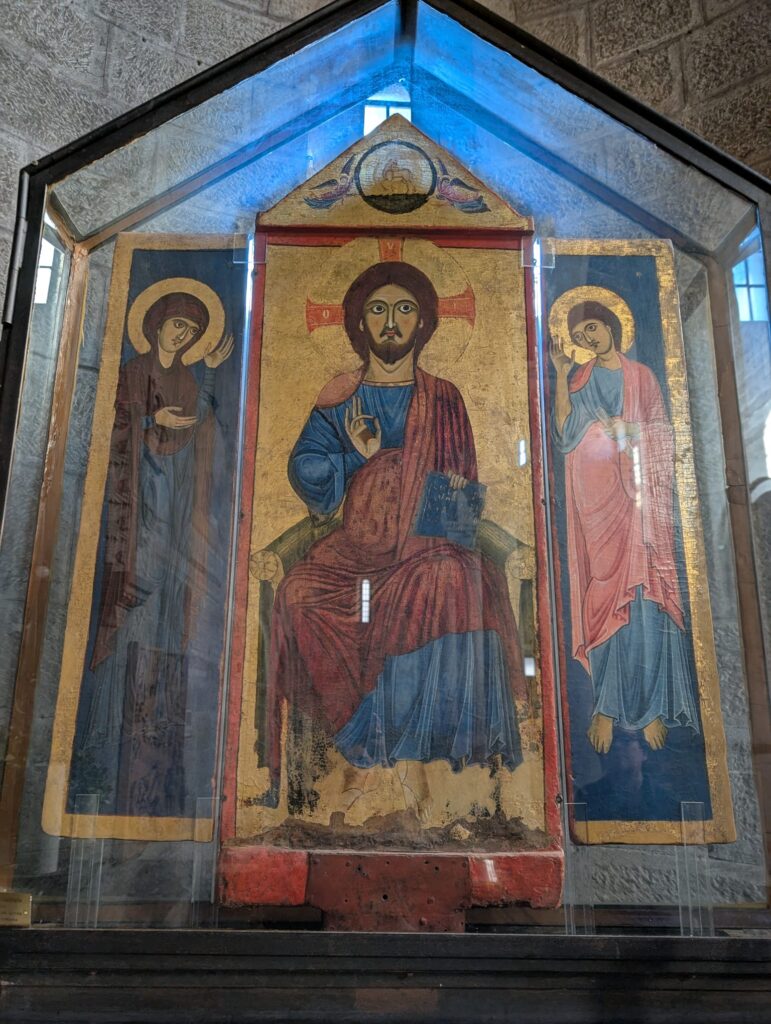
From that moment, devotion to the Holy Saviour became one of the city’s most cherished traditions. The local government even established official participation in the feast, which was celebrated with grand processions featuring the city’s various guilds and trades, each carrying candles and banners in a magnificent display of faith and civic pride.
Although the original procession was suspended after 1870, the tradition was revived in the 1960s. Today, the image of the Saviour is placed on a decorated cart pulled by oxen, echoing the humble origins of its discovery. The cart makes its way through Viterbo’s historic streets, accompanied by clergy, local groups, and many devoted citizens.
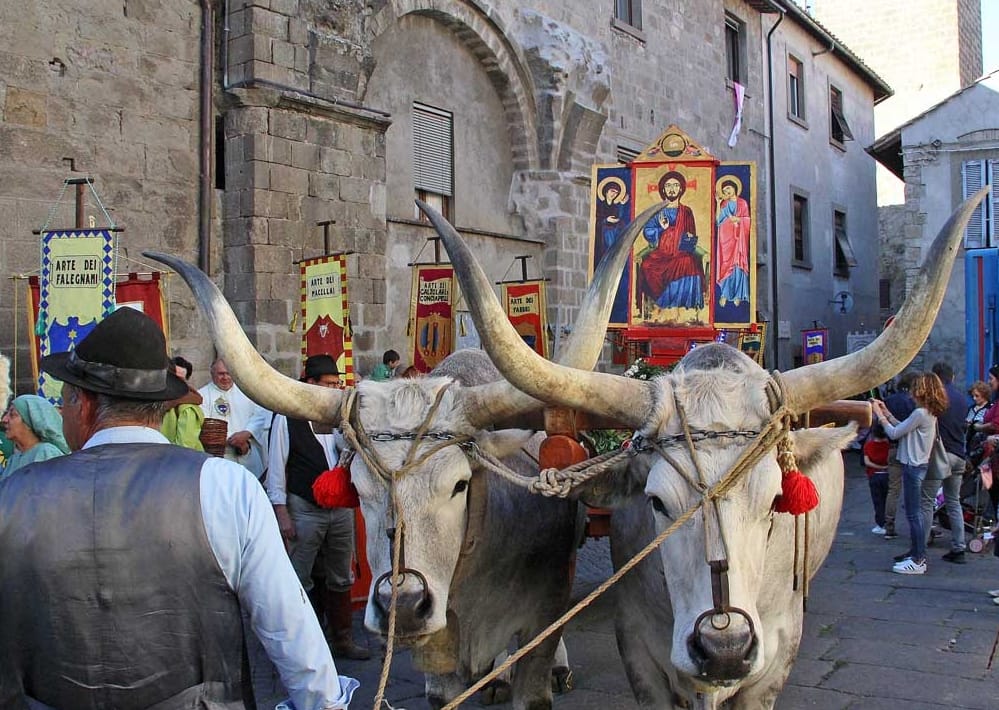
The Feast of the Holy Saviour, celebrated on the second Sunday of May., It’s not only a religious event but also a celebration of Viterbo’s identity and pride in its history — a living link between faith, history, and community.
It is one of the many precious traditions Italy has maintained through centuries, made so much more enjoyable when you discover the story behind the beautiful artifact.