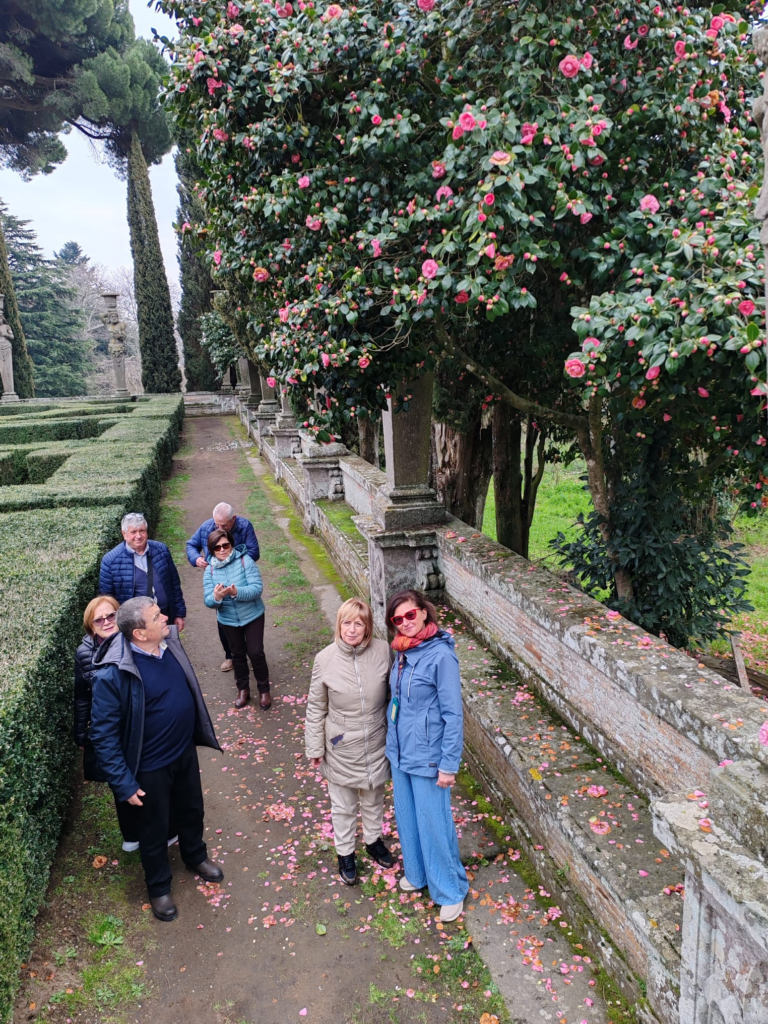
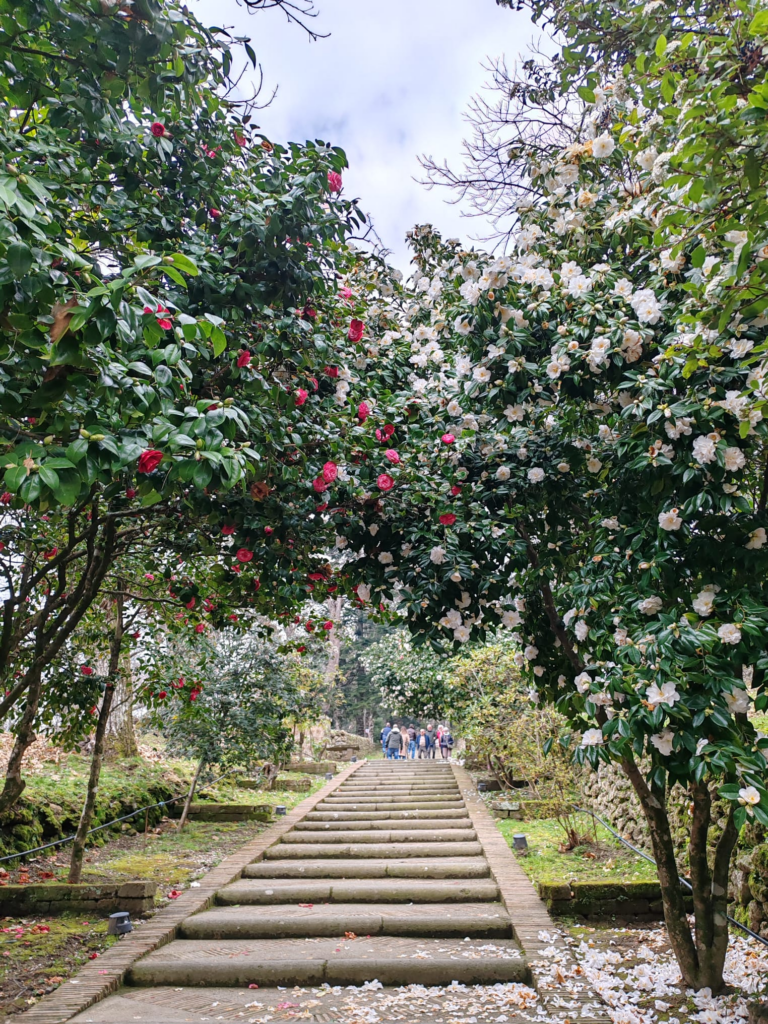
Today I had the pleasure of guiding a lively group from Frosinone to Palazzo Farnese. I was especially excited to see this year’s camellia blossoms, as I had heard they had just begun to bloom — and they did not disappoint. The garden was simply magical.
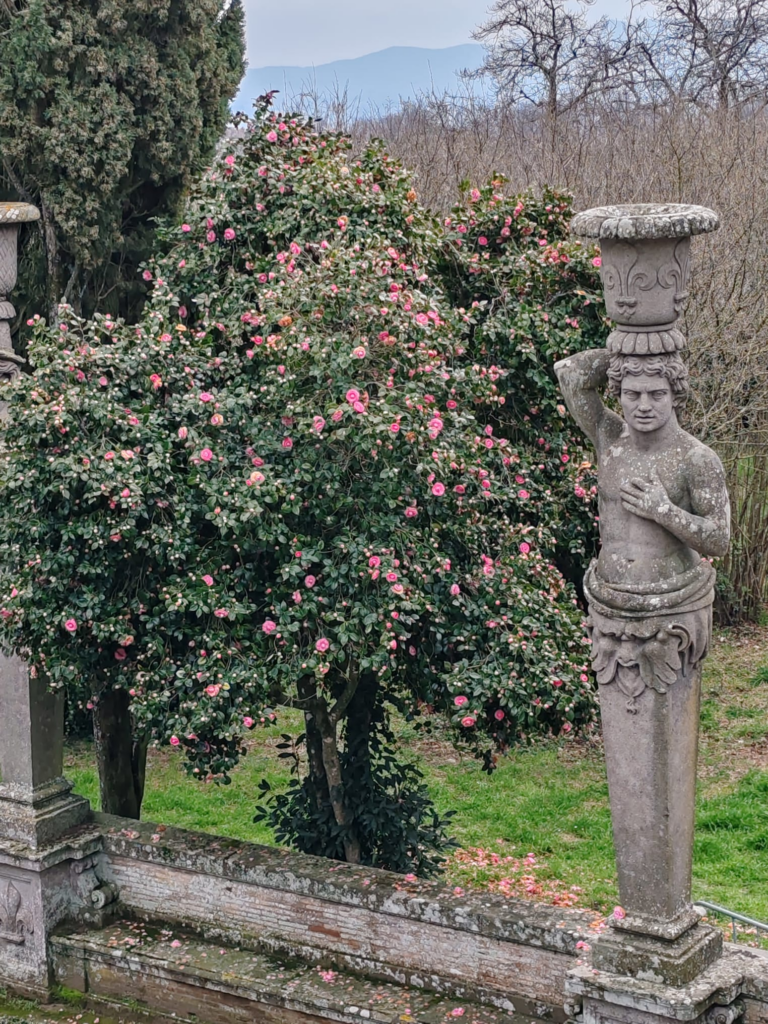
Italian-style gardens, developed between the Renaissance and the Baroque periods, did not make extensive use of colorful flowers because they were based on architectural principles of order, symmetry, and control over nature. Evergreens, geometric hedges, and statues were preferred to create permanent structures consistent with the villa and the surrounding hilly landscape.
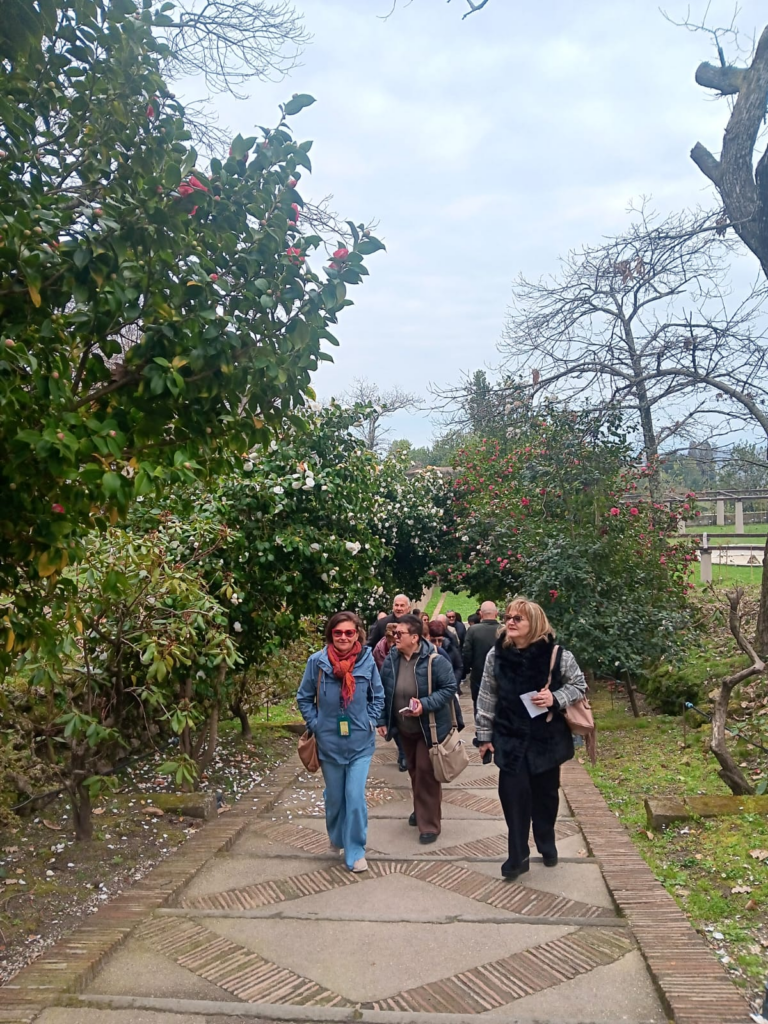
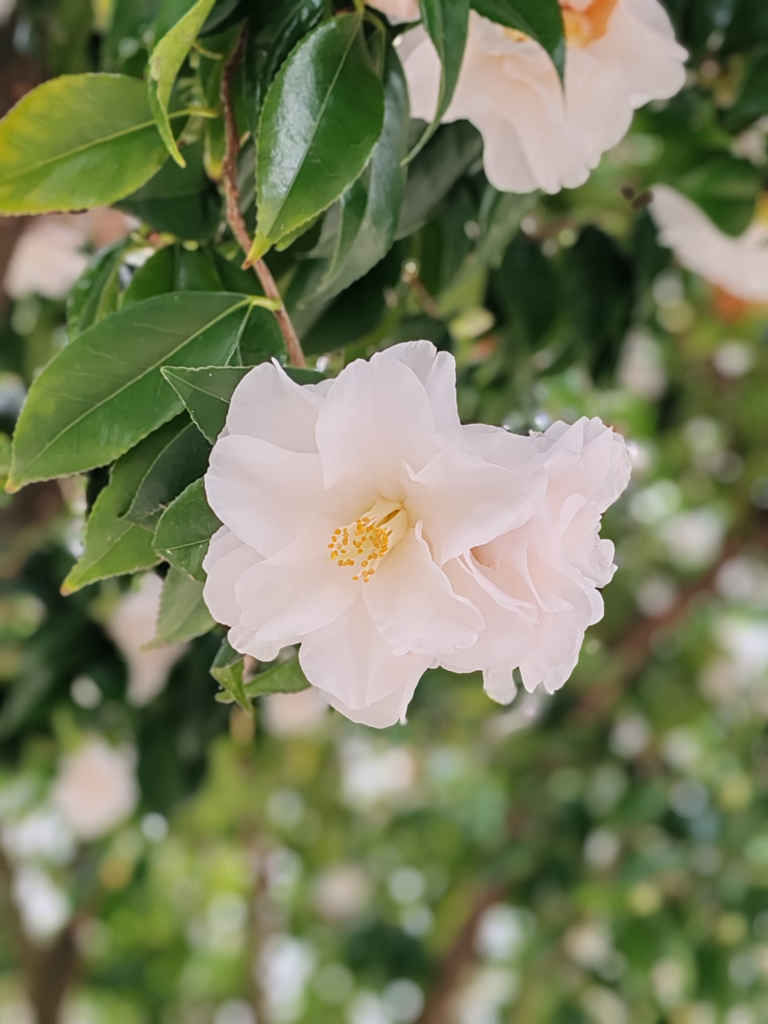
However, Camellias were introduced into historic Italian gardens starting in the late 18th century (late 1700s), with widespread diffusion established in the 19th century. The first specimens arrived in Italy between 1760 and 1786.