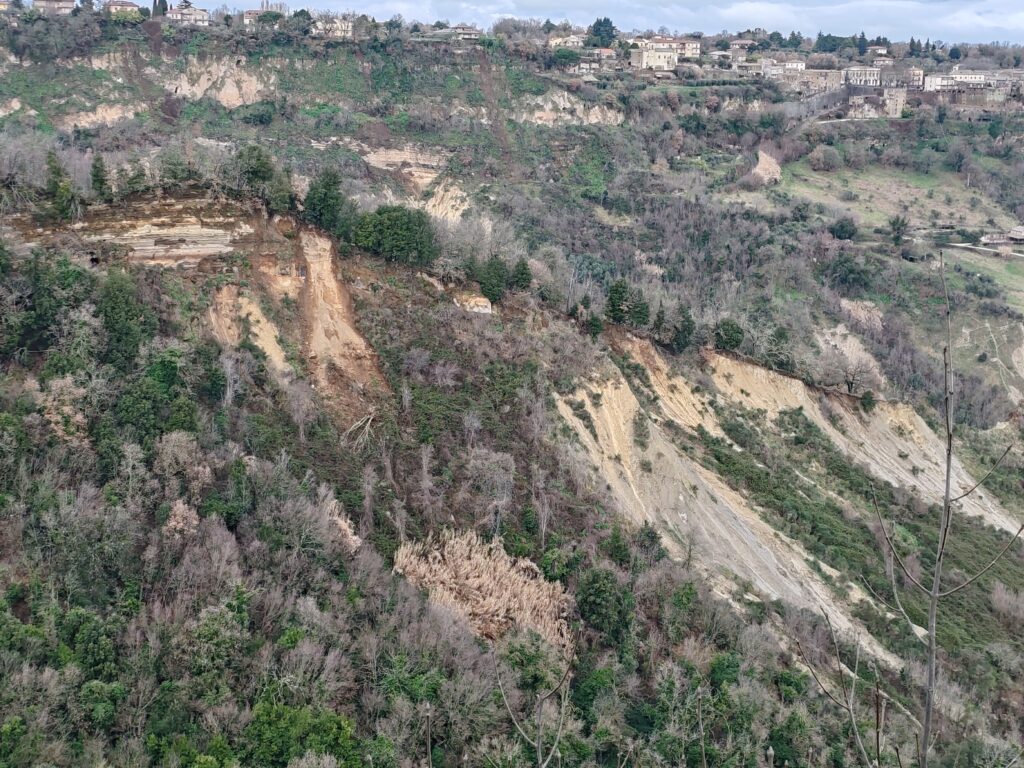
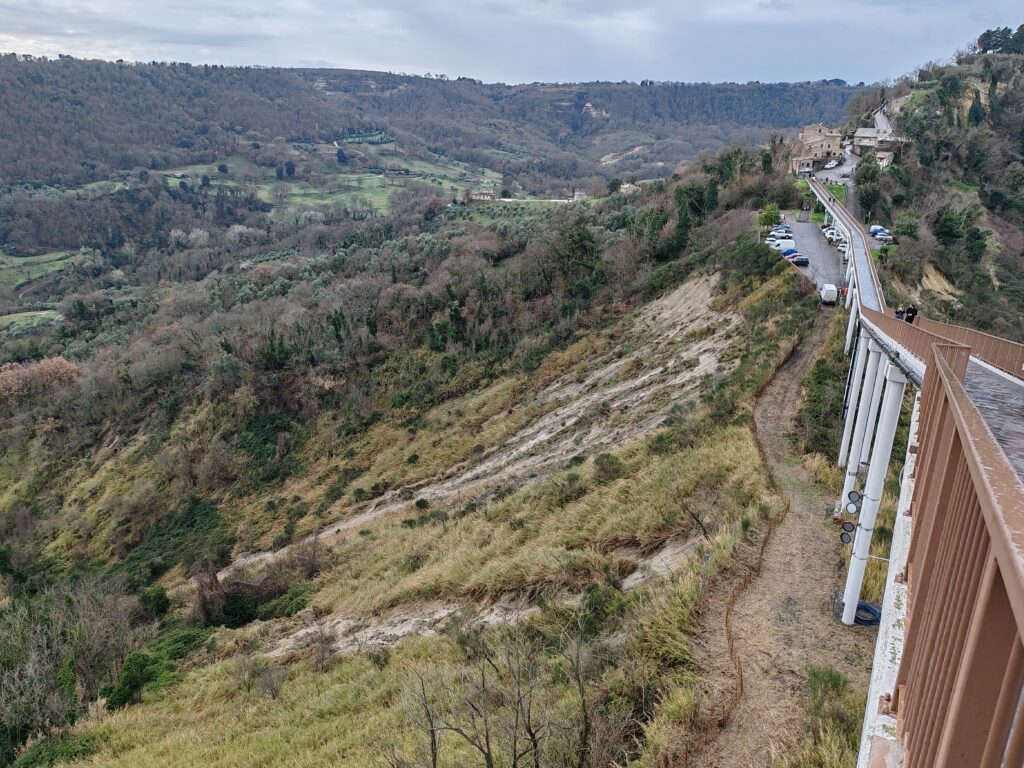
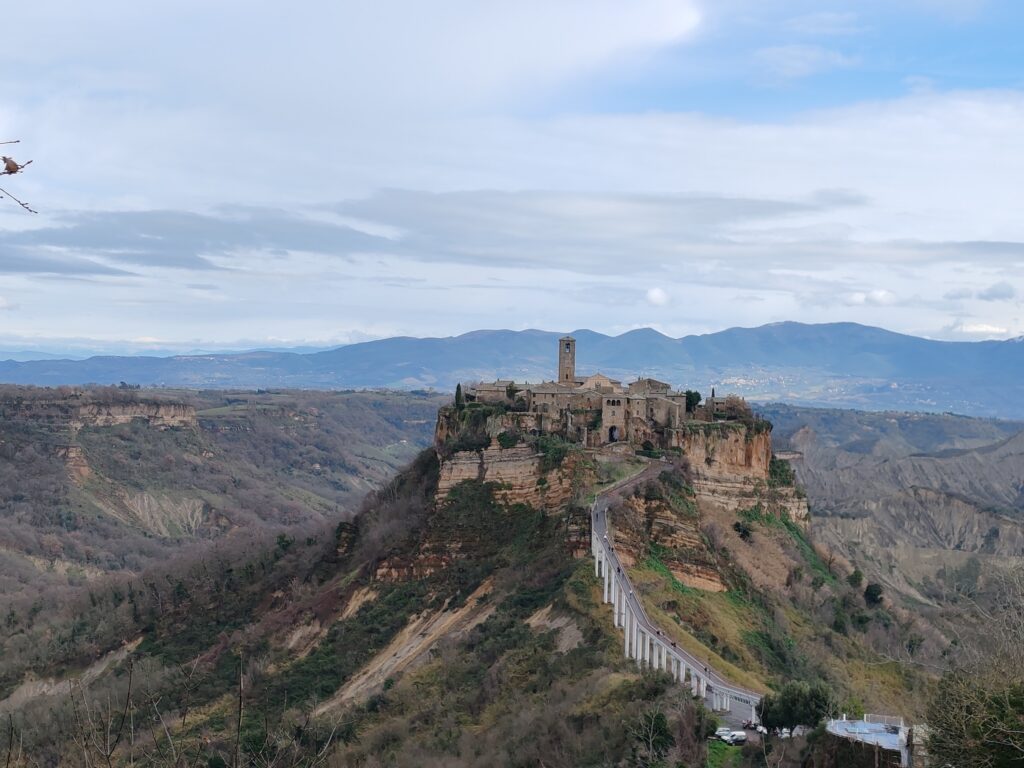
The recent weather has made Civita’s fragility impossible to ignore. Across the cliffs, fresh landslides cut pale scars through the greenery, where soil and rock have given way under the weight of water.
Seen from above, the town appears steady and timeless. Seen from below, the slopes tell a different story — one of erosion, collapse, and constant adjustment. Rain has been testing the land’s limits. Each new landslide is a quiet warning that the balance between human settlement and nature is easily disrupted.
And yet, this vulnerability is what makes the place feel so valuable. Knowing how easily it could be damaged changes how we look at it. It becomes something to safeguard rather than consume, something to understand rather than control. Protection here means respecting natural limits, investing in care, and accepting that preservation requires ongoing effort.
Fragile places like this are not weak — they are precious. Their survival depends on attention and responsibility, and in return, they offer a powerful reminder: what can be lost is often what matters most.
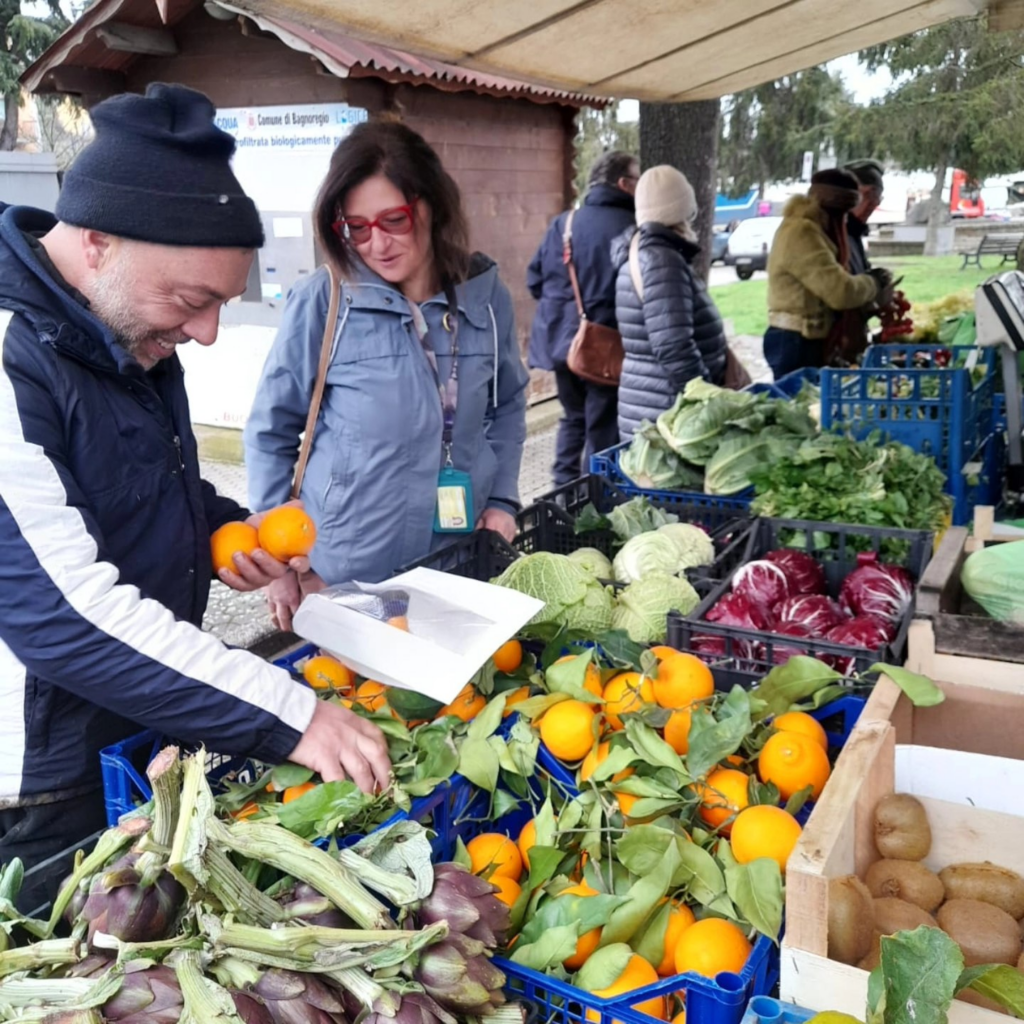
One of the reasons I love giving tours in Civita di Bagnoregio—even on a rainy Monday morning—is that it’s market day ! I can stock up on fresh local vegetables from my favourite stall.
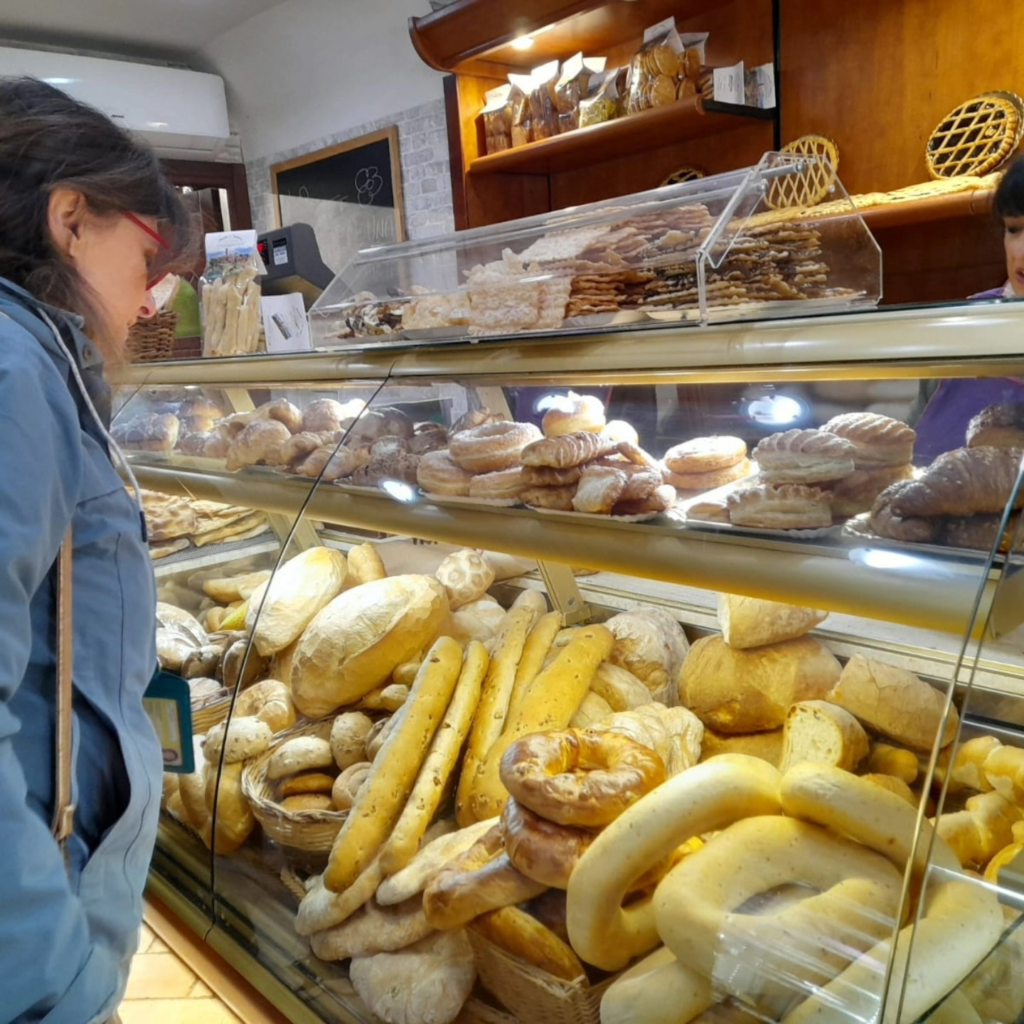
And let’s not forget the local bakery: they make at least 20 different kinds of bread, and once you step inside, leaving with just one loaf is simply impossible
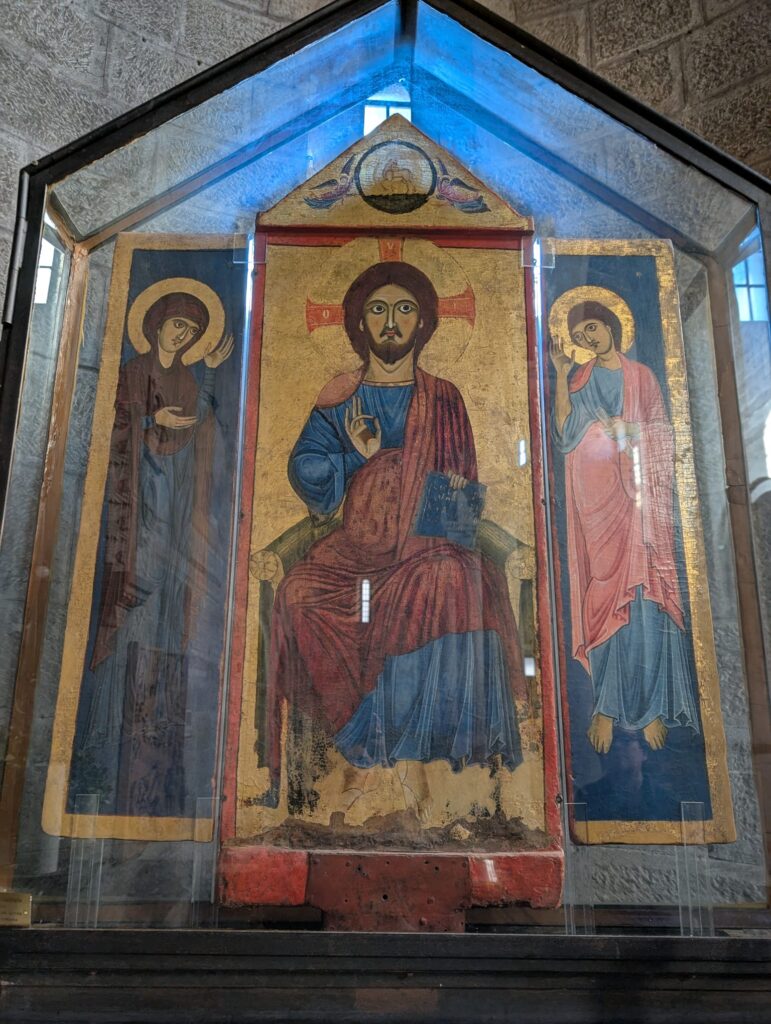
It is sharing the stories behind historical artifacts that gives me the most joy as a tour guide. Yesterday morning I had the opportunity to share this joy with a small group I took on a “behind the facade sights tour of Viterbo” . Joining me were a colleague from Rome who wanted to explore this area and a dear friend from Australia who had been in the area many times, but had only seen the most iconic places. We entered one of my favourite Romanesque churches, Santa Maria Nova, and they were both captured by a painting on leather of the holy Saviour. The painting was beautiful and intriguing, as is so much of the art found in churches and museums across Italy. However, it was when I was able to share the story behind the painting that the interest of my tour participants was truly engaged.
This is the story behind the artwork…
It was year 1283, when, according to a manuscript found in the church archives, two ploughmen discovered a miraculous image of Christ while working in a field in the area known as Chirichera.
The oxen pulling the plough suddenly stopped, refusing to move despite all efforts. When the men began digging around the plough, they uncovered a stone chest containing a beautiful triptych of the Saviour, painted on leather applied to wooden boards in the Roman-Byzantine style. The find was seen as a divine sign, and the image was solemnly brought in procession to the nearby church of Santa Maria Nuova, accompanied by clergy, city officials, and the citizens of Viterbo.
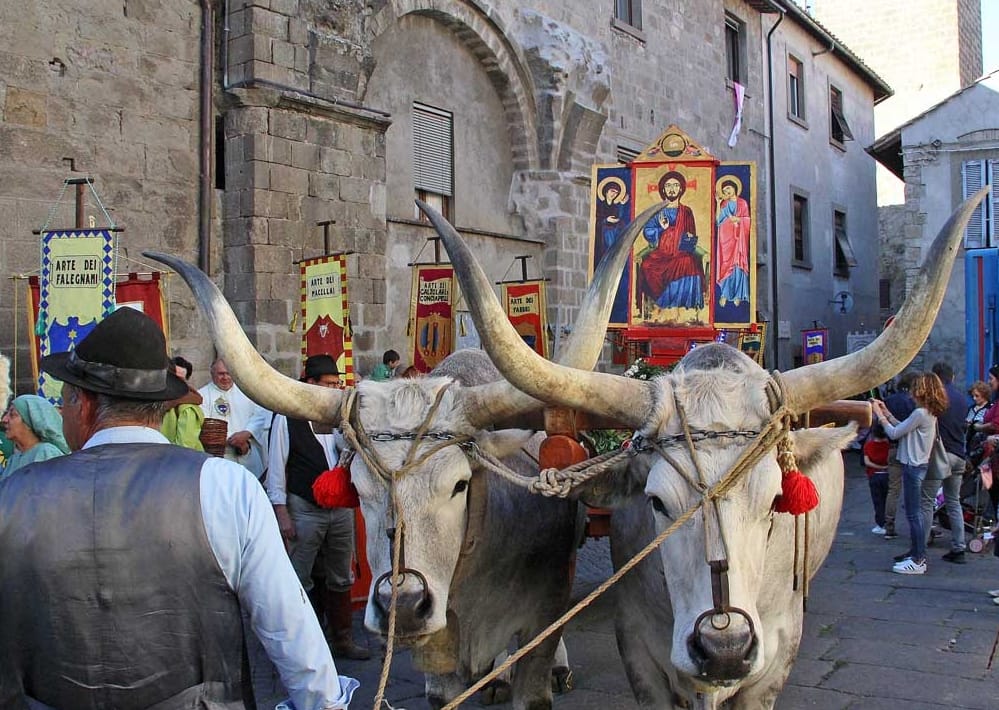
From that moment, devotion to the Holy Saviour became one of the city’s most cherished traditions. The local government even established official participation in the feast, which was celebrated with grand processions featuring the city’s various guilds and trades, each carrying candles and banners in a magnificent display of faith and civic pride.
Although the original procession was suspended after 1870, the tradition was revived in the 1960s. Today, the image of the Saviour is placed on a decorated cart pulled by oxen, echoing the humble origins of its discovery. The cart makes its way through Viterbo’s historic streets, accompanied by clergy, local groups, and many devoted citizens.
The Feast of the Holy Saviour, celebrated on the second Sunday of May., It’s not only a religious event but also a celebration of Viterbo’s identity and pride in its history — a living link between faith, history, and community.
It is one of the many precious traditions Italy has maintained through centuries, made so much more enjoyable when you discover the story behind the beautiful artifact.
Did you know that tour guides in Italy need to pass university-level exams in order to obtain a tour guide license?
Visitors to Italy often want a private tour of some of the historic and artistic sites throughout the country. We sat down with our friend Floriana Carnevali, who has been a guide licensed by the Italian government since 2012, and asked her to tell us a little bit about this profession.
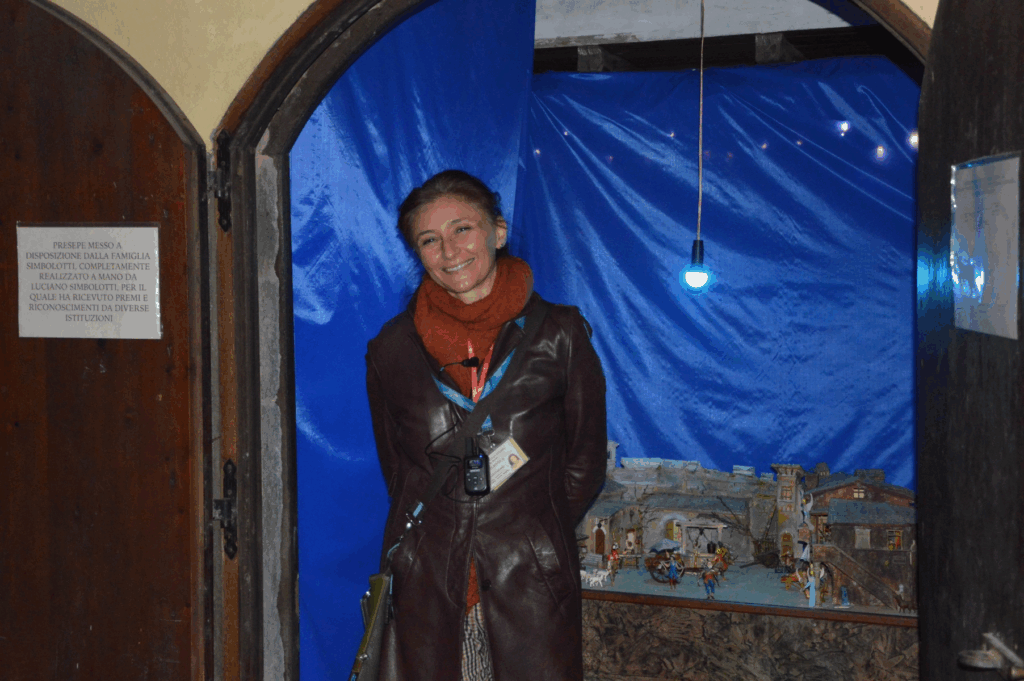
Floriana poses in front of a hand made presepe (Photo courtesy of M.Walker and Z.Bowers)
“Guides must pass a separate test for each language,” Floriana explains. “Sometimes people have to take the test several times before they pass.” For the exams, prospective guides have to demonstrate extensive knowledge in a particular province — for example, Floriana is an expert in our area, the Viterbo province north of Rome. Often called the Tuscia, this is an area rich in Etruscan (pre-Roman) history as well as Roman, medieval, and Renaissance periods.
“Guides have to have a deep knowledge of the geography, archaeology, art history, and enogastronomia [wine and food] of their area,” she says, “as well as a fluency in the languages they will use.” Guides may only conduct tours in the languages they are licensed in; the languages are printed on their government-issued ID badges. Floriana is Italian, fluent in English — she is also a Cambridge-certified English teacher — and she’s licensed to conduct tours in Italian, English, French, and Spanish.
Until recent years, a guide was only permitted to conduct tours in their own province; that is, a guide licensed in Rome couldn’t lead a tour in Florence, or vice versa. However, in an effort to enhance tourism, the government has relaxed and unified the certification requirements. Now, a guide like Floriana is an expert in one area, as the exams are still regional; but they can conduct a tour anywhere in the country.
Nevertheless, Floriana prefers to stick close to home. “I like to concentrate on tours in my area,” she says. “I can dig much deeper into the local history and traditions, and that makes a more interesting presentation, I think.”
A tour guide’s license lasts forever, but many guides regard that as a minimum knowledge base. Some, like Floriana, keep up to date on new scholarship and research about the historical sites they visit with tourists. During slow tourism periods (especially in winter), conferences and conventions take place, where guides can learn and add to their base of knowledge. Many tour guides take their work as a labor of love as well as a livelihood, seeking out additional information about their area whenever and wherever they can find it. What they relay in their tours reflects the extra research they’ve done, beyond what was necessary for the original exams.
For instance, Floriana’s approach to her tour of the Sacro Bosco di Bomarzo (also known as the Parco dei Mostri or “Park of Monsters”) is fascinating and unique: “I incorporate new historical scholarship into the visit — some of it hasn’t even been published yet. So people can see these fantastic sculptures in a new light.”
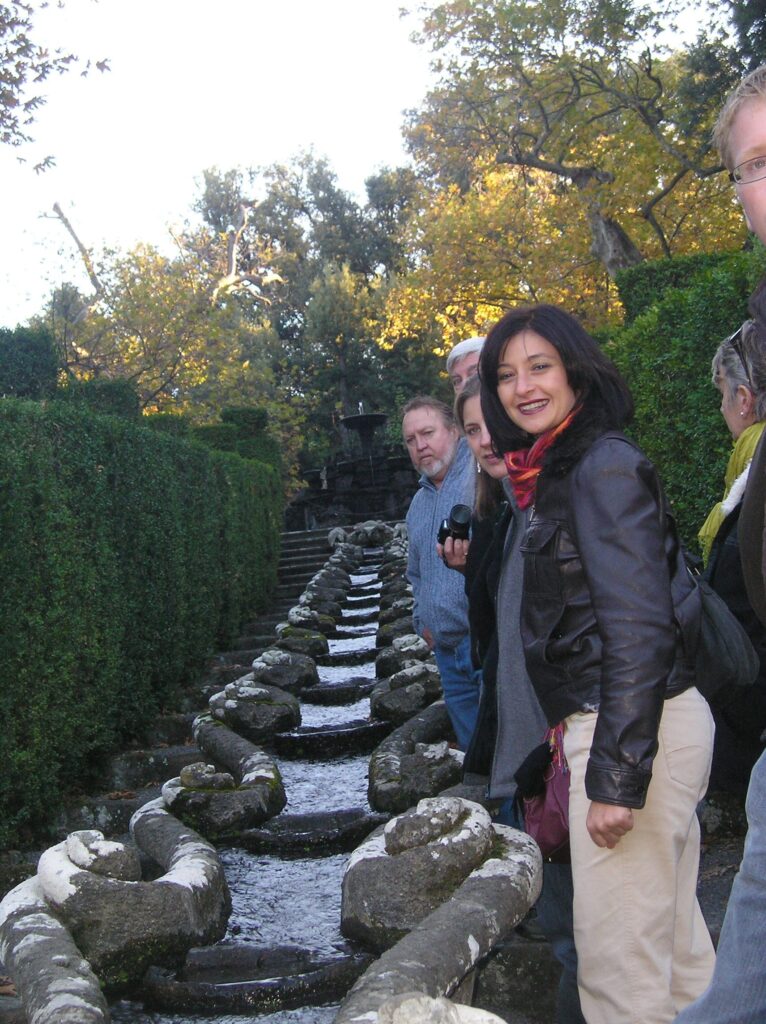
Floriana at work with a group of tourists (Photo courtesy of M.Walker and Z.Bowers)
Floriana also suggests that tourists communicate with their guide in advance, to let them know about the ages and interests of the group. “I try to design a tour depending on each group of clients, and I keep up with different aspects of each site.” With advance notice, she explains, a guide can change the presentation if it’s a group with a lot of youngsters, or if it’s a group of art historians.
For many of the tourist sites in Italy, particularly those conducted indoors, guided groups are required by law to use “whispers.” This doesn’t mean just speaking in a quiet voice. “Whispers” refers to the audio apparatus used by guides.
“The visitors use ‘auricolari’ — like ear-buds — tuned into the guide’s headset microphone,” Floriana explains. “So we can speak in a normal, quiet voice, and not disturb other groups or individuals.” This is especially useful at indoor locations like churches and palazzi and some museums, she said – and it’s obligatory.
How does one find a good private guide? “It’s best to find a company that focuses on the specific area you want to visit,” Floriana advises, “so that your guide is more likely to be well-versed in the local sites.” Moreover, a big nationwide or international company means a lot of middle-man percentages; a local company can offer a better price for a group as well as a local guide.
Floriana has many interesting stories from her many years of leading tours. One has to do with tipping. Many tourists, of course, are from the United States, and they sometimes tip in US dollars. “Tour guides and coach (bus) drivers have a sort of network,” Floriana says. “If someone is going to visit the US, other guides give that person their dollars in exchange for Euros. It’s the only way many of them can actually ever use that tip money.” [Our takeaway: Please tip your guides in local currency!]
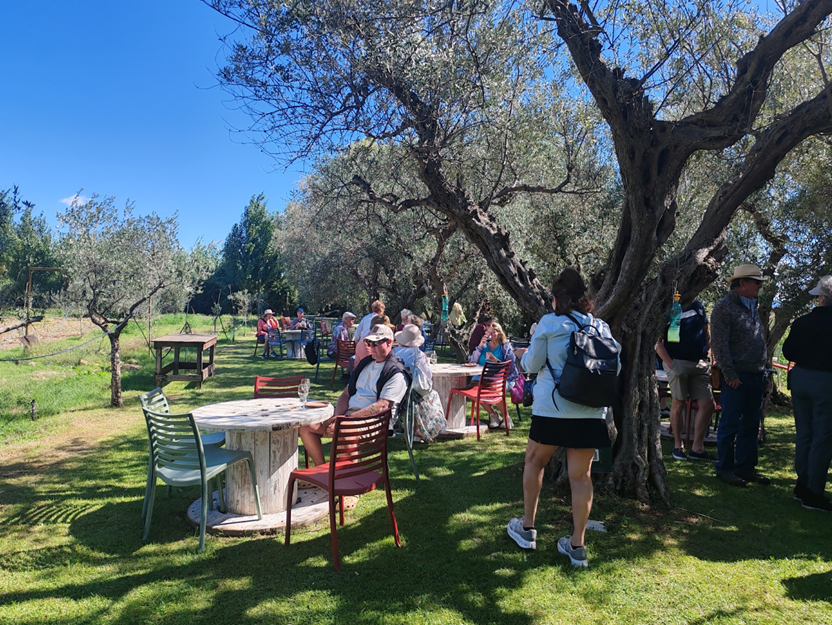
Another story she related was about guiding a tour to a winery visit on Lago Bracciano. It was a friendly, lively tour group of Americans. “As everyone was tasting wine and taking in the beautiful vineyards, one visitor asked me: what do you do when you’re not leading tours?” Among several jobs, Floriana works teaching English; and she is also a singer — a soprano with a deep background in classical music, including opera and musical theatre. “I told them I had just come from performing a concert at a castle not far away, singing opera arias with a tenor.” Upon hearing this, of course, the visitors were very excited, and they asked her several times to sing. “I felt so relaxed with these nice people in that beautiful place, and the wine had started to pour — so finally I sang a little bit of O Sole Mio.” One woman started crying a bit, she said, and the sun started setting over the vine-covered hillside. “It was a perfect ‘Italian moment’ — and they gave me a very generous tip afterwards!”
And in this case, she added happily, the tip was in Euros.
About the authors: Zeneba & Matt moved from the U.S. to Italy in 2019, where they live and work as performing musicians. They are also authors of four award-winning travel guidebooks, and as Little Roads Europe they craft itineraries for travelers who want to visit small towns and enjoy authentic experiences in Italy and Ireland. www.littleroadseurope.com
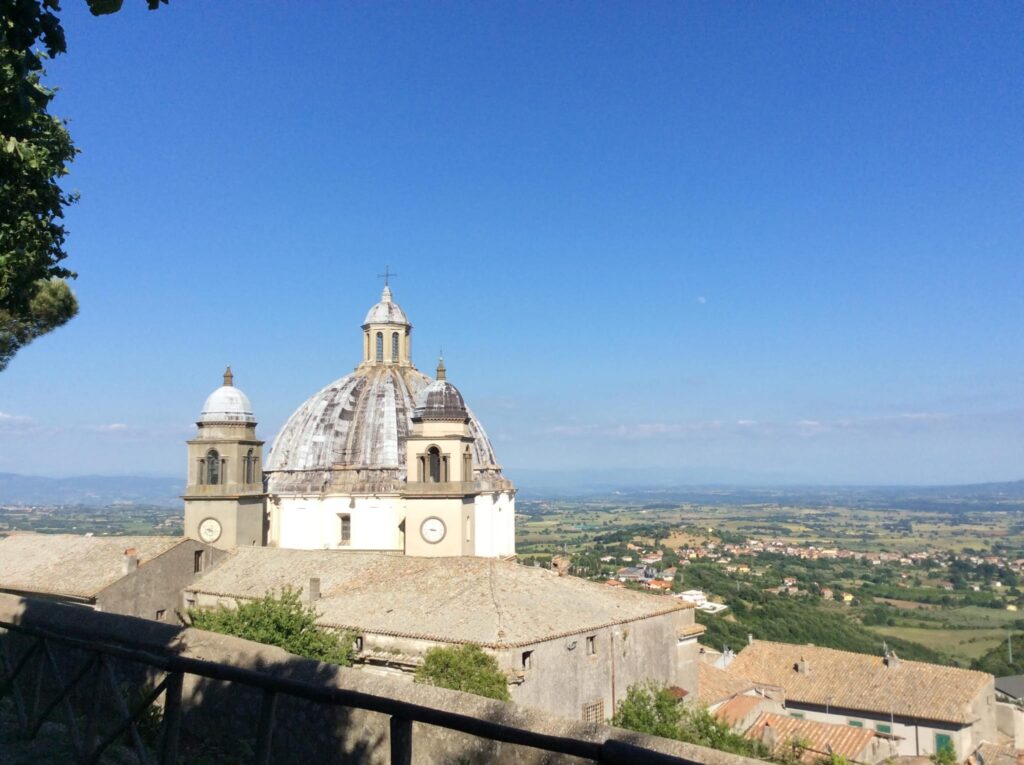
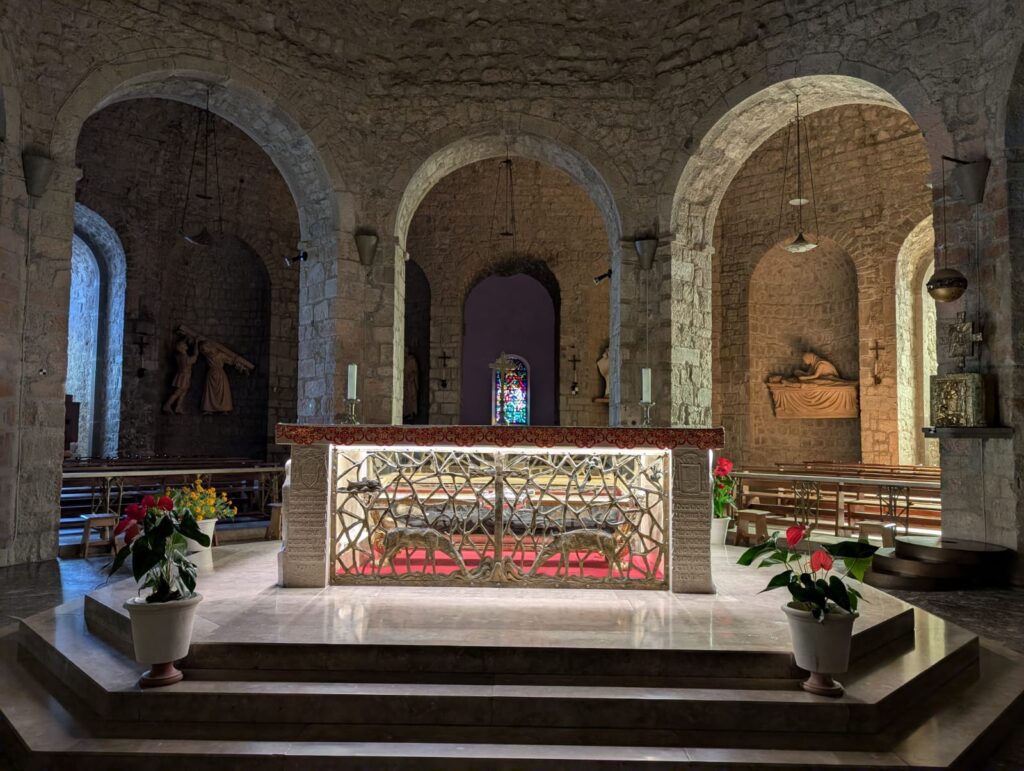
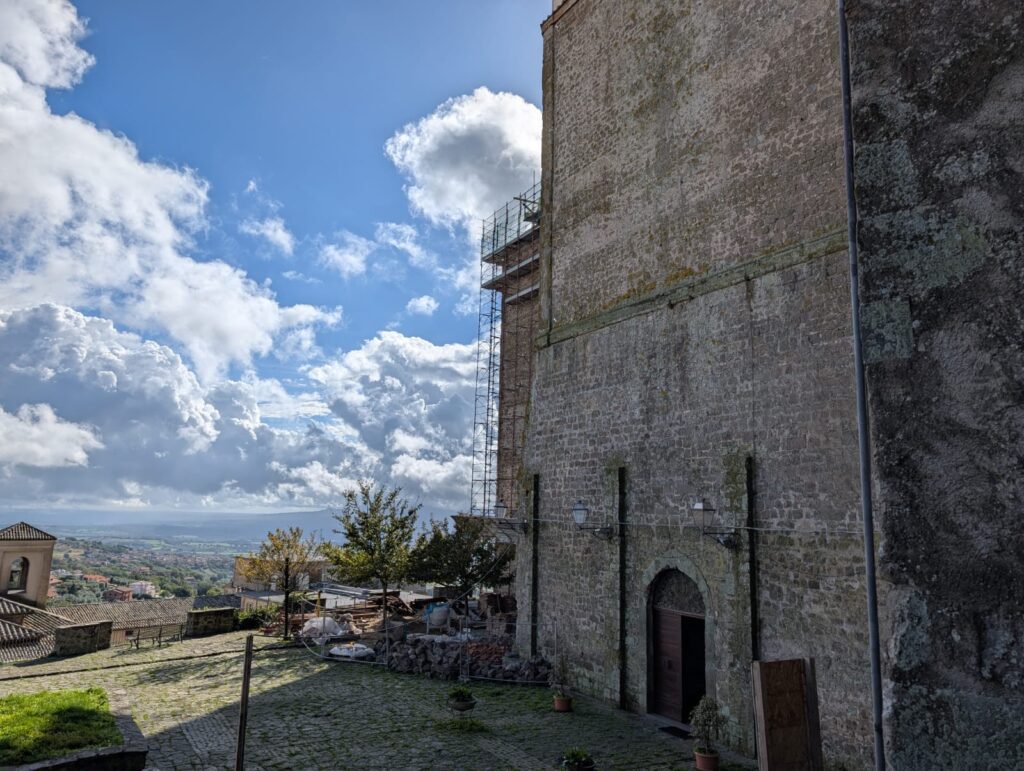
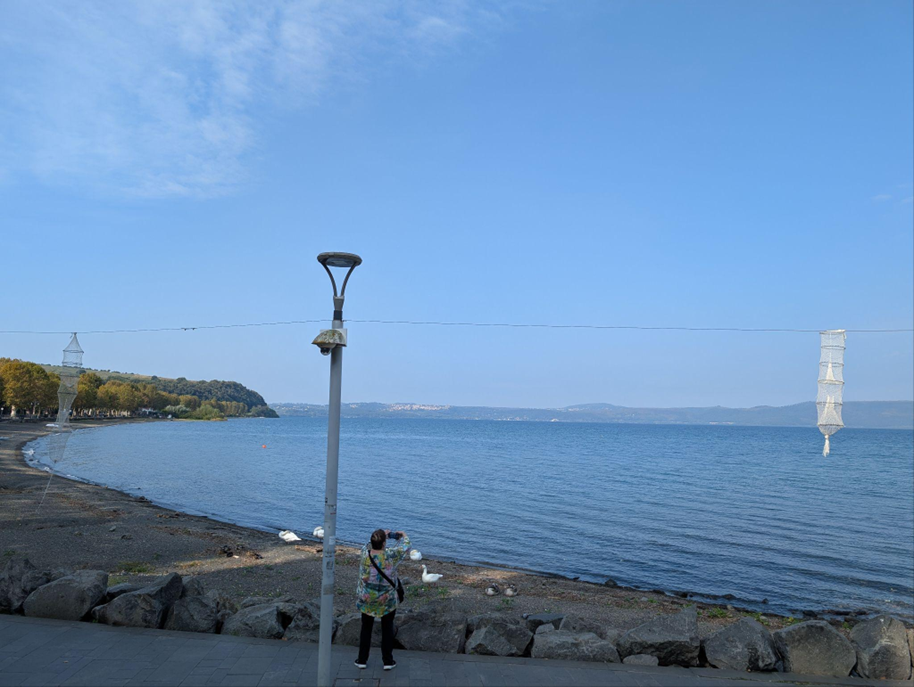
This Sunday morning, I had the pleasure of guiding a group of Italian tourists through the charming hilltop town of Montefiascone, a gem overlooking Lake Bolsena in northern Lazio. The day began bright and peaceful, but soon the sky turned grey and a light rain started to fall. Seeking shelter, we made our way down from the panoramic gardens at the top of the town toward the Cathedral of Santa Margherita—our next stop.
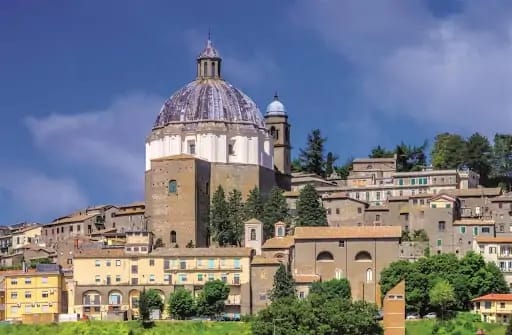
The cathedral is one of Montefiascone’s proudest landmarks, famous for its magnificent dome, designed by the Baroque architect Carlo Fontana. Its grand proportions make it one of the largest domes in Italy, and it dominates the skyline with elegance and strength.
When we arrived, however, Mass was still being celebrated, so we couldn’t enter the main church just yet. Instead, I decided to lead the group to a quieter, lesser-known place: the crypt beneath the cathedral.
Built in the 14th century, the crypt is the most ancient part of Santa Margherita. Down there, away from the noise of the rain and the bustle of town life, time seems to slow. The air feels thick with history and reverence. Visiting such spaces always brings a sense of mystery—they remind us of the delicate link between life and death, faith and memory.
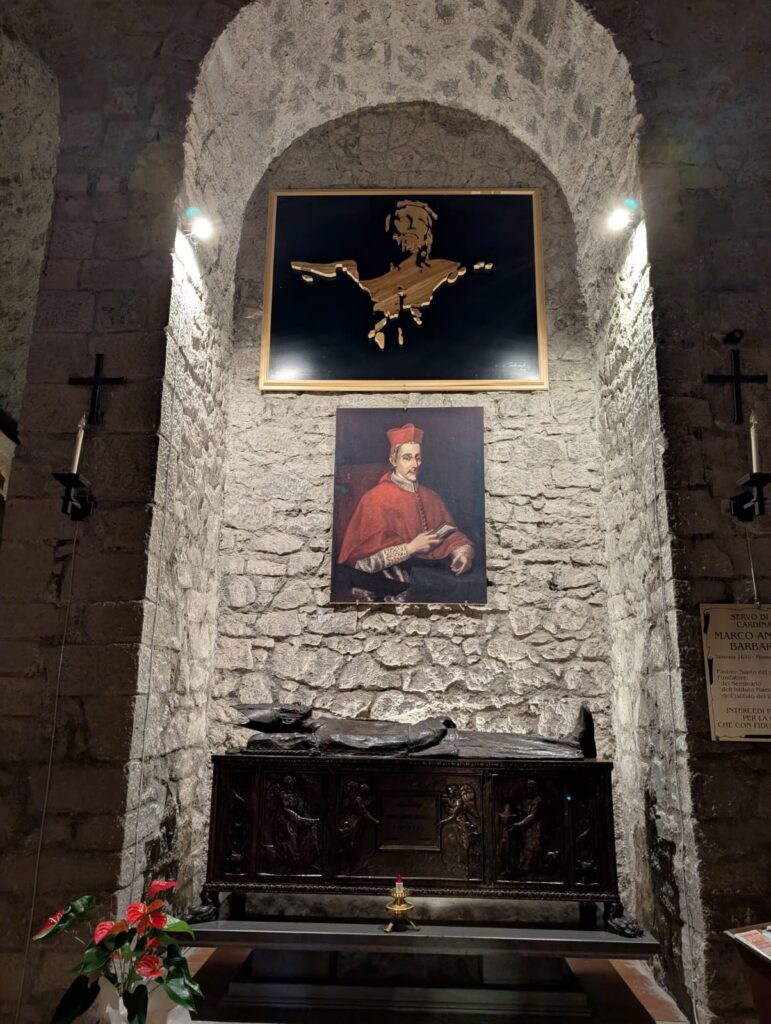
At the center of the crypt lies a glass sarcophagus containing the body of Saint Lucy Filippini. She was a young woman of deep faith and determination who lived in the 17th century. Moved by a strong vocation, she dedicated her short life to educating girls, particularly those from poor families, at a time when women had very few opportunities for learning. Her vision and compassion were supported by Cardinal Marco Antonio Barbarigo, who now rests in another sarcophagus facing hers.
Standing in that quiet crypt, surrounded by centuries of devotion, I couldn’t help but reflect on the enduring impact of Saint Lucy’s mission. Her legacy lives on: to this day, many schools around the world bear her name, continuing her work by providing education and support to those in need.
As we climbed back up to the cathedral, the rain began to ease, and the town glistened in the soft light breaking through the clouds—a fitting end to a visit filled with beauty, faith, and reflection.
Every October, the medieval town of Soriano nel Cimino, nestled in the hills of northern Lazio, bursts to life with its famous Sagra delle Castagne — the Chestnut Festival. This centuries-old celebration honors the town’s rich history and the harvest of the chestnuts.
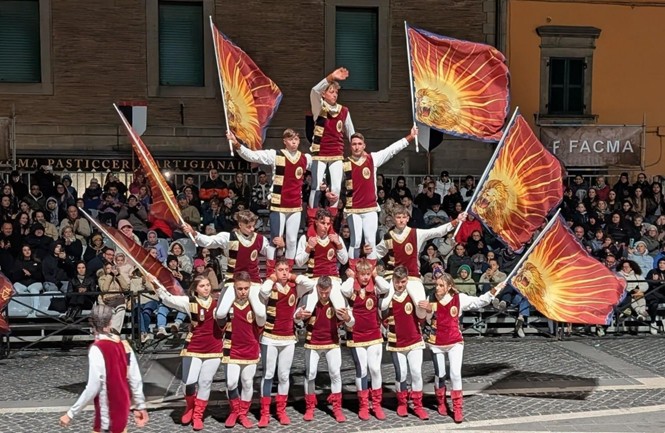
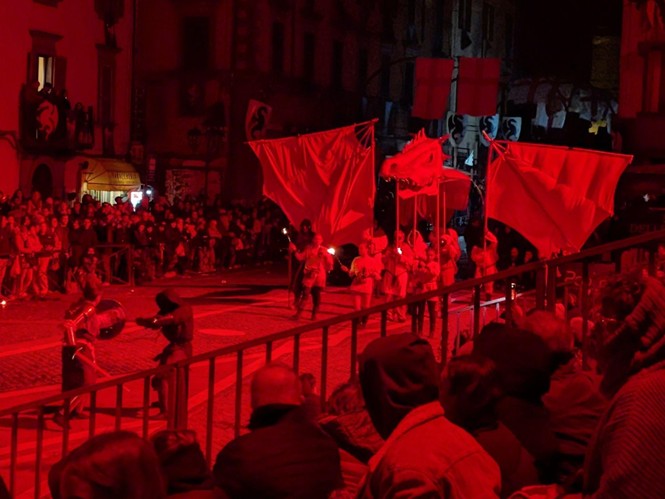
In the town square, the spirit of medieval pageantry comes alive. Dressed in rich maroon and gold, flag bearers and performers captivate the crowd with acrobatic displays and the rhythmic flutter of banners emblazoned with the lion, the historic symbol of Trinità, one of the medieval districts. The spectacle evokes a sense of pride and unity, blending artistry and athleticism before an enthusiastic audience, supporting the young performers who train all year round for this special event.
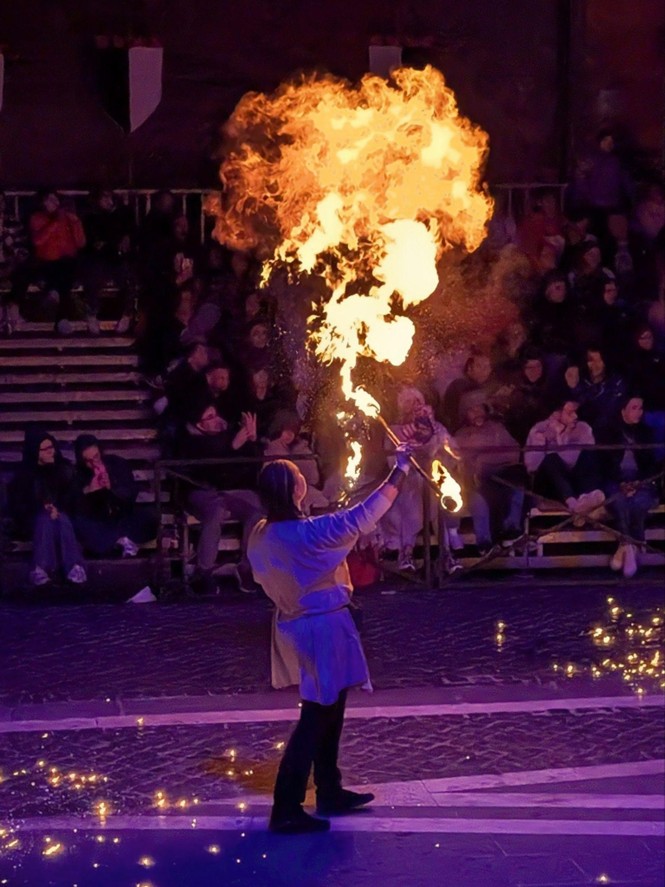
The Saint George district reenacts the battle between good and evil, symbolized by fire and the dragon.
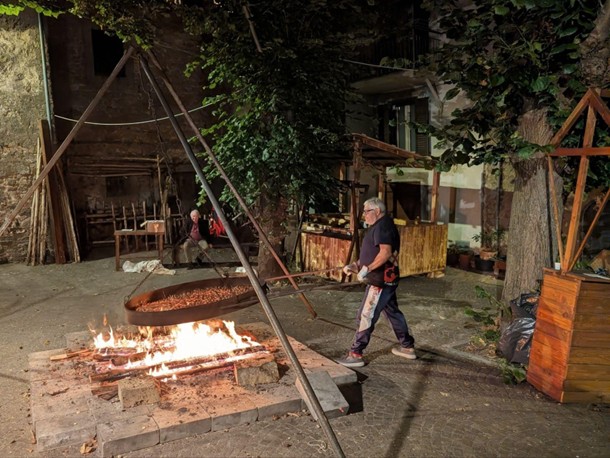
As night falls, the aroma of roasted chestnuts fills the air. Locals gather around open fires, tending to massive pans of chestnuts roasting over the flames — a warm and welcoming ritual that has remained unchanged through generations. The festival is more than a celebration of the harvest; it is a living connection to Soriano’s past — a time when the castle on the hill watched over farmers and forests, and the chestnut was both sustenance and symbol of endurance.
In Soriano nel Cimino, every October, the Chestnut Festival rekindles that enduring spirit — a joyful reminder that tradition, when celebrated together, remains forever alive.
The Chestnut Festival in Soriano nel Cimino continues through 19 October 2025. Click here for the 58th EDITION 2025 PROGRAM
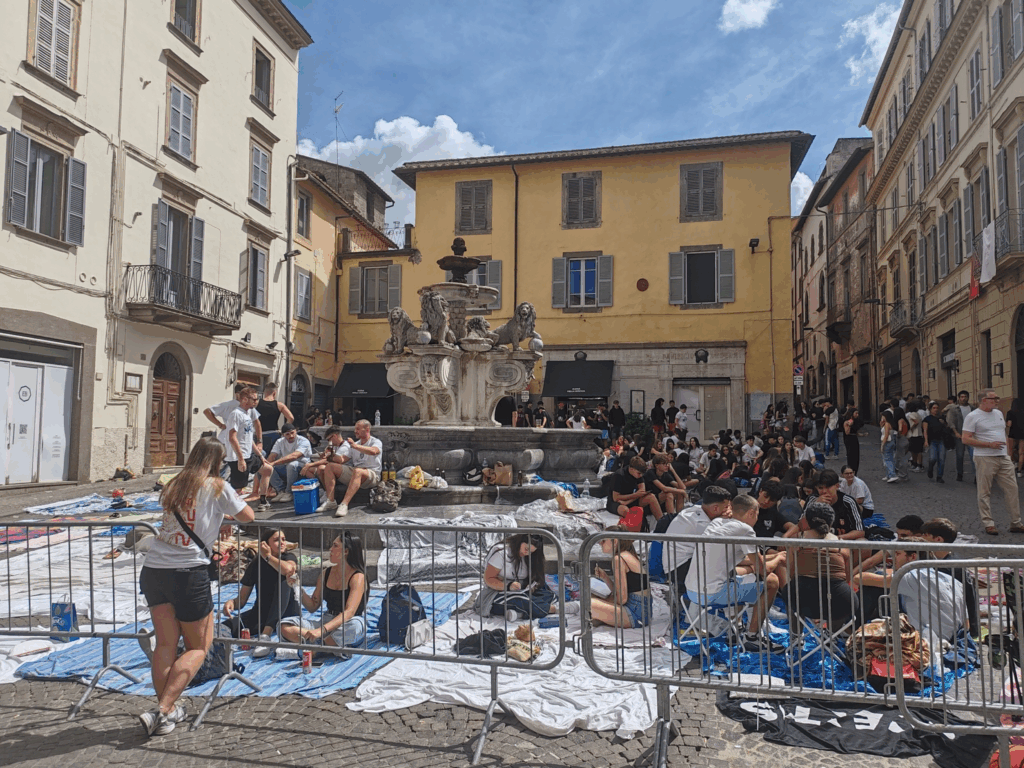
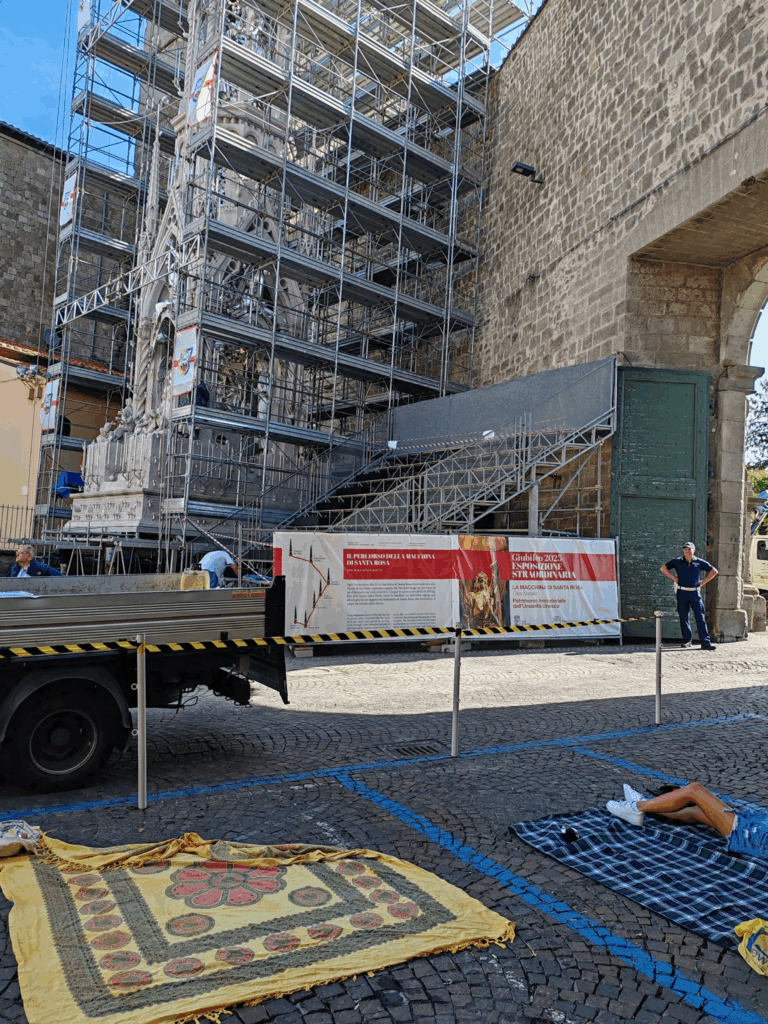
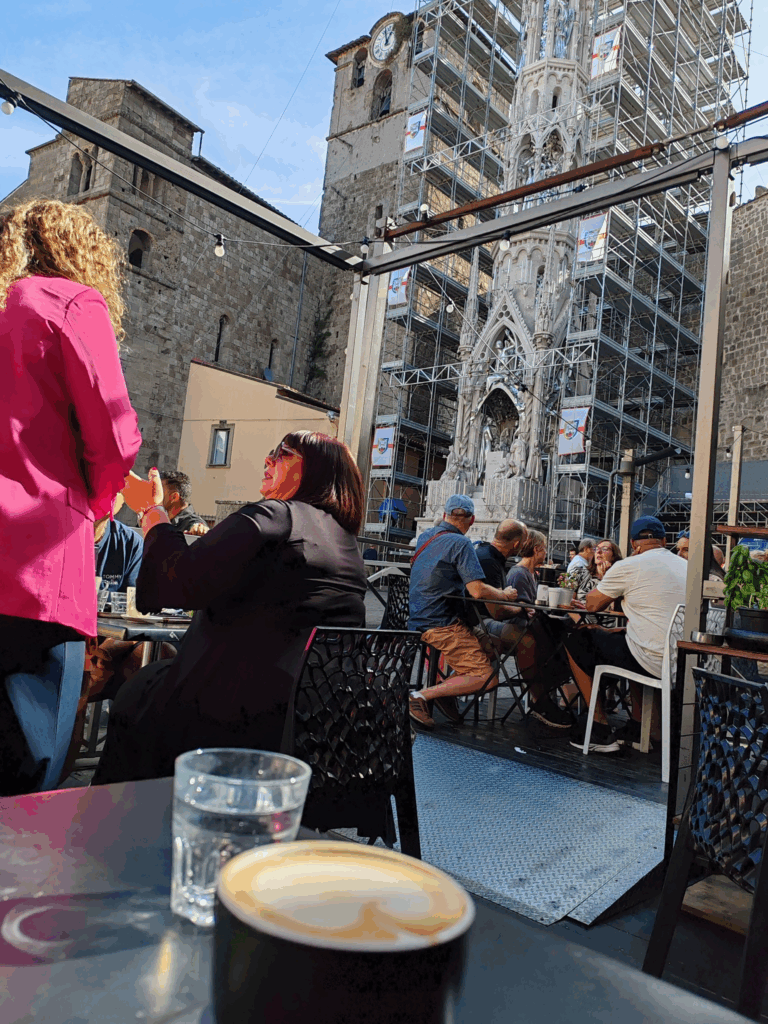
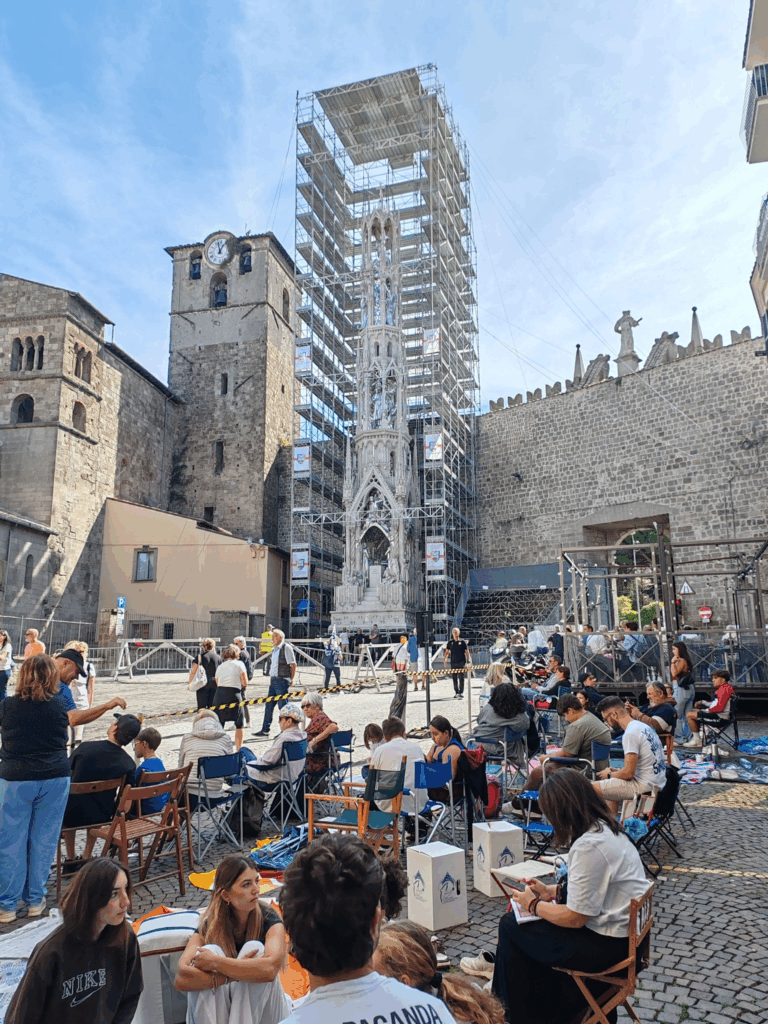
Waiting for my morning tour of Viterbo and enjoying a cappuccino while looking at the Macchina of Santa Rosa. Tonight during the Unesco procession it will be transported by 100 men on their shoulders. People have been laying on towels and plastic sheets on the side of the streets since last night to ensure they’ll get to see it carried at around 10pm tonight, even if just for a few minutes…
“Floriana gave us an extraordinary afternoon through the San Pellegrino district. Her explanations were passionate but clear, mixing local traditions with art history.” — Visitor group, Viterbo (2022)
“A very prepared guide. She knows how to bring to life not only the monuments but also the stories of the families who lived there.” — Cultural association, Soriano nel Cimino (2023)
“We spent a day in Civita di Bagnoregio and Orvieto with Floriana. What stood out was her ability to weave Etruscan history with everyday anecdotes. It never felt like a lecture, more like walking with a local friend who knows every corner.” — Private travelers, Travel blog (2021)
“Guided historical walks were led by local licensed guide Floriana Carnevali, who illustrated the castle and historic center to visiting groups with great professionalism.” — Pro Loco Soriano, Chestnut Festival (2019)

 ! I can stock up on fresh local vegetables from my favourite stall.